
IPTV Basics · September 2, 2026 · 7 min read
How Does IPTV Work? Protocols, Players and Formats Explained
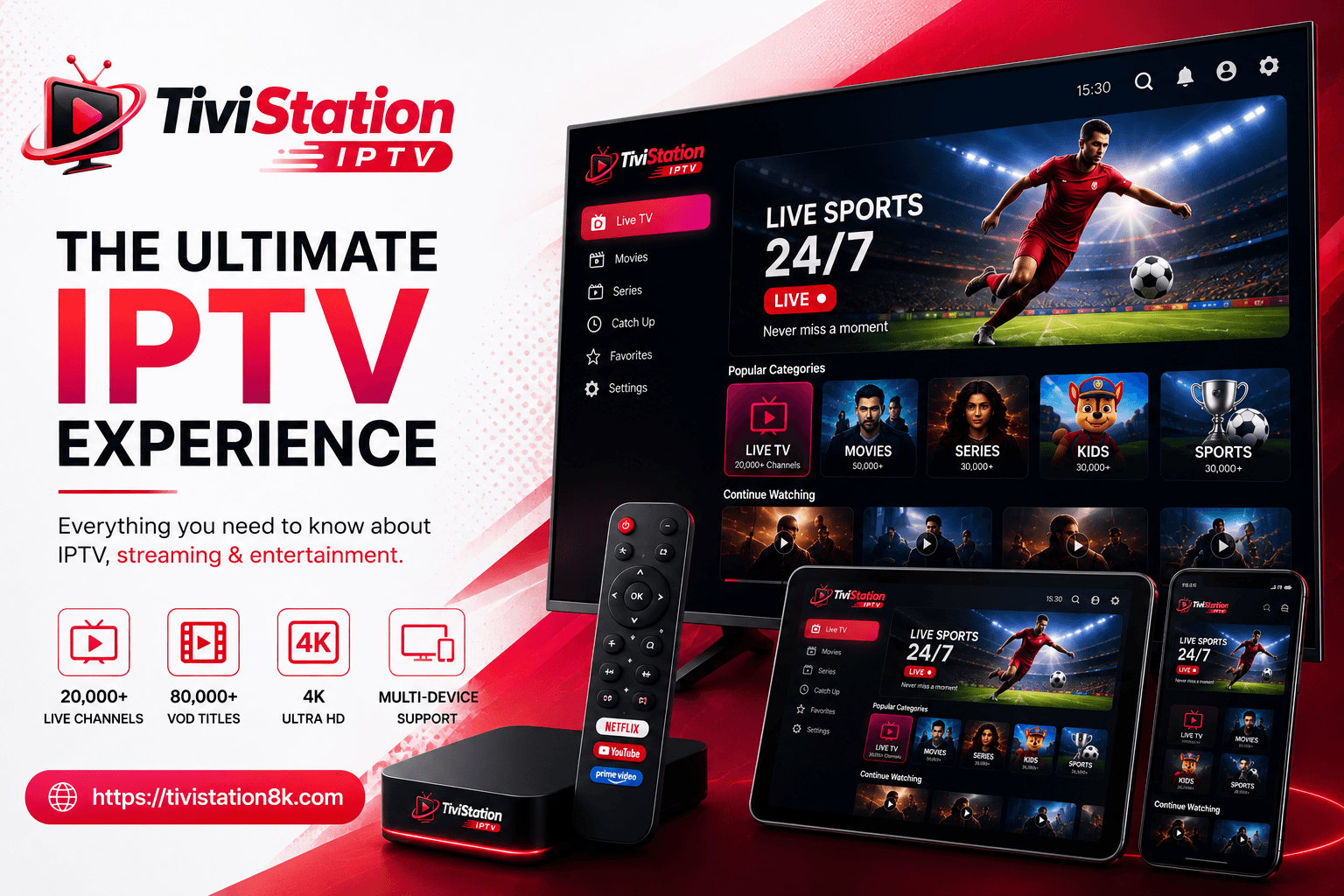
IPTV works by streaming each TV channel as an individual video feed from the provider's servers to your device over the internet, on request. Your subscription is a set of credentials; a player app uses those credentials to fetch the channel list, program guide and on-demand library, then plays whichever stream you select. Three pieces make this work: the provider's servers, a delivery format (M3U playlist or Xtream Codes login), and a player app on your device.
The three layers of an IPTV service
1. The provider's servers
The provider ingests broadcast channels, encodes them into internet-friendly streams at several quality levels (4K, FHD, HD, SD), and serves them from data centers. Good providers run load-balanced clusters so that a Champions League final or a PPV fight doesn't overwhelm a single server — this is what "anti-freeze" marketing actually refers to.
2. The delivery format: M3U vs Xtream Codes
An M3U playlist is a plain text file listing the URL of every channel; you paste one link into your player and it builds the interface around it. Xtream Codes API is a login-based alternative — server address, username and password — that lets the app fetch channels, VOD and EPG data separately and keep them updated automatically. Most modern players accept both; Xtream logins are generally more convenient. A third option, MAG portals, ties the subscription to a set-top box's MAC address instead of a login.
3. The player app
The player is just the interface: it renders the channel grid, EPG and VOD shelves, and hands the actual video to your device's decoder. That is why the same subscription looks different in IPTV Smarters Pro than in TiviMate — and why you can switch apps freely without changing provider. We compare the popular options in best IPTV player apps.
What happens when you press play?
- The app looks up the channel's stream URL from your playlist or Xtream account.
- Your device requests the stream; the server begins sending small video segments a few seconds long.
- The player buffers a handful of segments ahead, then starts playback — this is why live IPTV runs a few seconds behind the actual broadcast.
- If your bandwidth drops, the player either rebuffers or (on adaptive streams) steps down to a lower quality until the connection recovers.
What is the EPG and catch-up TV?
The EPG (Electronic Program Guide) is the scrollable now-and-next TV guide, delivered as a data feed alongside the channels. Catch-up TV extends this backwards: on supported channels the server records the last several days of programming, so you can open the guide and replay a show you missed. TiviStation includes both — the EPG on every plan and up to 7 days of catch-up on supported channels.
Why does this architecture matter to you?
- Device freedom — anything that runs a player app can be your TV; see the installation guides for each device type.
- One login, many screens — the same credentials work across your devices (plans set how many stream simultaneously).
- Diagnosable problems — buffering is almost always a connection, Wi-Fi or device issue rather than a mystery; the troubleshooting guide works through the causes in order.
New to the topic entirely? Start with the overview: What is IPTV? A complete guide.
Frequently asked questions
What is an M3U link?
An M3U link is a URL pointing to a playlist file that lists every channel in your subscription. You paste it into an IPTV player app once, and the app loads and organizes the full channel list.
What is Xtream Codes API?
Xtream Codes API is a login format used by most IPTV players: instead of pasting a long playlist URL, you enter a server address, username and password, and the app fetches channels, VOD and the program guide automatically.
Related resources
Written by the TiviStation team · Published September 2, 2026. Questions about anything in this guide? Contact our 24/7 support team or learn more about TiviStation.
Ready to try TiviStation?
Plans from $20/month with 20,000+ channels in 4K and a 24-hour free trial.
See Pricing