
IPTV Basics · September 2, 2026 · 8 min read
What Is IPTV? A Complete Guide to Internet-Based TV
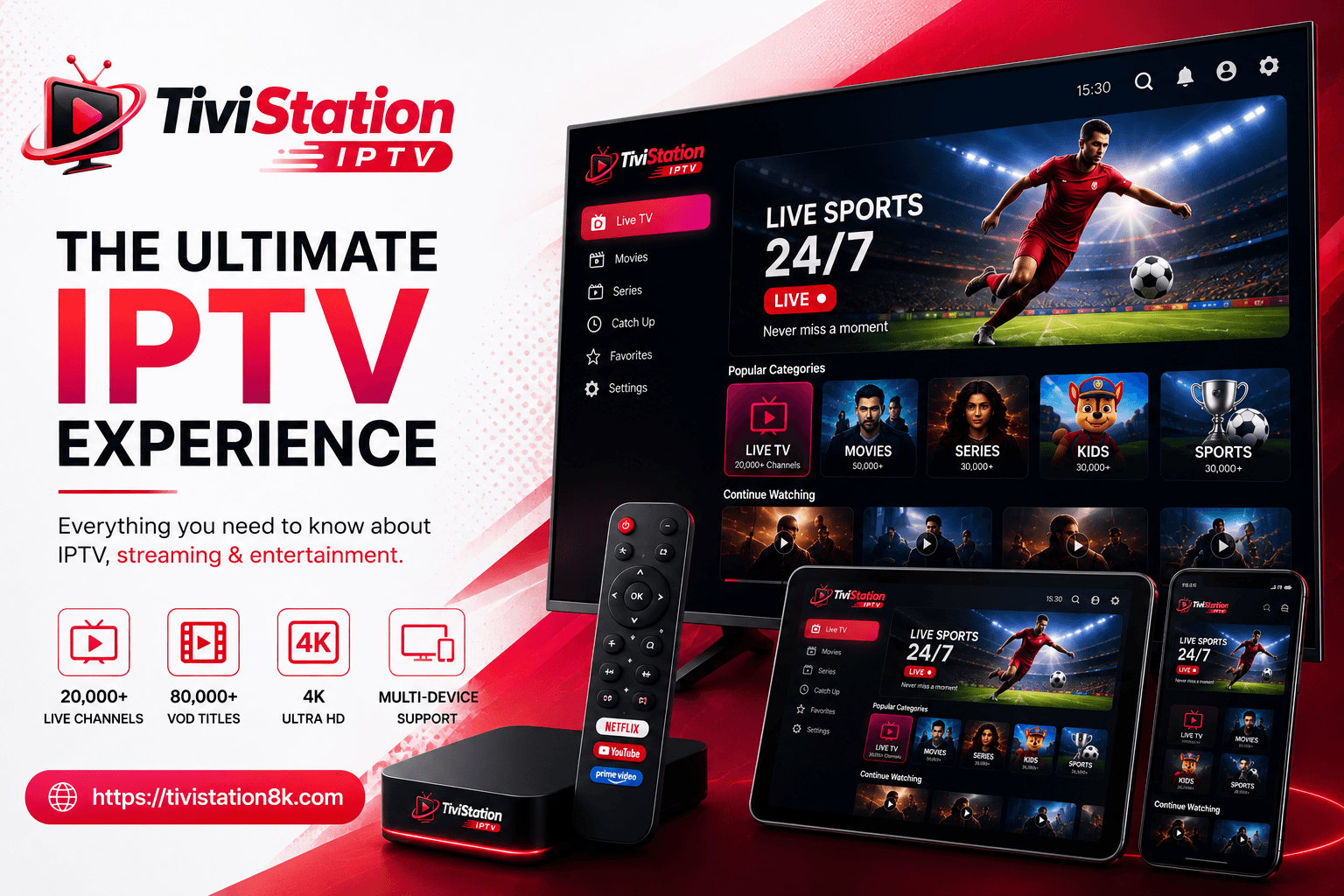
IPTV (Internet Protocol Television) is a way of delivering live TV channels and on-demand video over a standard internet connection instead of through a cable line, satellite dish or aerial. You subscribe to a service, receive a login, enter it into a player app on your TV, phone or streaming stick, and the full channel list loads within minutes. No new hardware, wiring or technician visit is required — a stable connection of about 10 Mbps is enough for HD, and 25 Mbps for 4K.
What is IPTV, exactly?
Traditional broadcast TV pushes every channel to every home at once, whether anyone is watching or not. IPTV works the other way around: when you pick a channel, your device requests that one stream from the provider's servers and plays it back in real time — the same mechanism Netflix or YouTube uses, applied to live television. Because the pipe is the open internet, an IPTV service can carry channels from dozens of countries and pair them with a large video-on-demand (VOD) library in a single subscription.
How does IPTV work in practice?
- You subscribe to an IPTV provider and receive credentials — usually an Xtream Codes login (server address, username, password) or an M3U playlist link.
- You install a player app such as IPTV Smarters Pro or TiviMate on your device.
- You enter the credentials once; the app downloads the channel list, VOD library and electronic program guide (EPG).
- You browse and watch exactly as you would with cable — with channel numbers, categories and a TV guide.
For a deeper technical walkthrough of playlists, protocols and player apps, read How does IPTV work?
What do you need to use IPTV?
- An internet connection — roughly 10 Mbps for HD, 25 Mbps for 4K.
- A device — Smart TV, Amazon Fire TV Stick, Android TV box, Apple TV, phone, tablet or computer.
- A player app — free or low-cost apps that display the channels (see our IPTV player comparison).
- A subscription — the login that actually contains the channels and VOD library.
What are the main advantages of IPTV?
- Cost — subscriptions typically cost a fraction of a cable bundle with comparable or wider channel coverage.
- Channel range — international channels from many countries in one place, not just your local market.
- Flexibility — watch on any screen you own, at home or away, and switch devices freely.
- On-demand included — most services bundle a movie and series library alongside live TV.
- No contract hardware — no set-top box rental, dish installation or multi-year lock-in.
What are the limitations?
IPTV is only as good as the connection and the provider behind it. A congested Wi-Fi network or an overloaded server shows up as buffering (our buffering guide covers the fixes). Quality varies enormously between providers, so it is worth checking trial access, uptime claims and refund terms before paying — the checklist in how to choose an IPTV provider walks through this. Legality also depends on the provider holding proper distribution rights and on your local regulations, so check the rules that apply where you live.
Who is IPTV suitable for?
IPTV suits cord-cutters who want live sports, news and international channels without a cable contract; expats and multilingual households who want home-country channels; sports fans who need leagues spread across many networks in one place; and anyone consolidating several streaming subscriptions into one. If you only ever watch on-demand originals from a single platform, a standard streaming app may be all you need — see IPTV vs cable TV for a full comparison.
How TiviStation fits in
TiviStation is an IPTV subscription service built on this model: 20,000+ live channels and 80,000+ on-demand titles delivered to any compatible device, with plans starting at $20/month, a 24-hour free trial and a 7-day money-back guarantee. You can browse the full channel list before subscribing.
Frequently asked questions
Do I need a special TV for IPTV?
No. IPTV works on any Smart TV, or on a regular TV with an inexpensive streaming device such as an Amazon Fire TV Stick or Android TV box. Phones, tablets and computers work too.
How much internet speed does IPTV need?
Around 10 Mbps is enough for a stable HD stream, and 25 Mbps or more is recommended for 4K. Most home broadband connections comfortably exceed this.
Is IPTV the same as Netflix or Disney+?
They share the same underlying technology — video over the internet — but IPTV services focus on live TV channels with an on-demand library included, while Netflix and Disney+ are on-demand only.
Related resources
Written by the TiviStation team · Published September 2, 2026. Questions about anything in this guide? Contact our 24/7 support team or learn more about TiviStation.
Ready to try TiviStation?
Plans from $20/month with 20,000+ channels in 4K and a 24-hour free trial.
See Pricing