
IPTV Basics · September 2, 2026 · 5 min read
Live TV Streaming Explained: How It Works Over the Internet
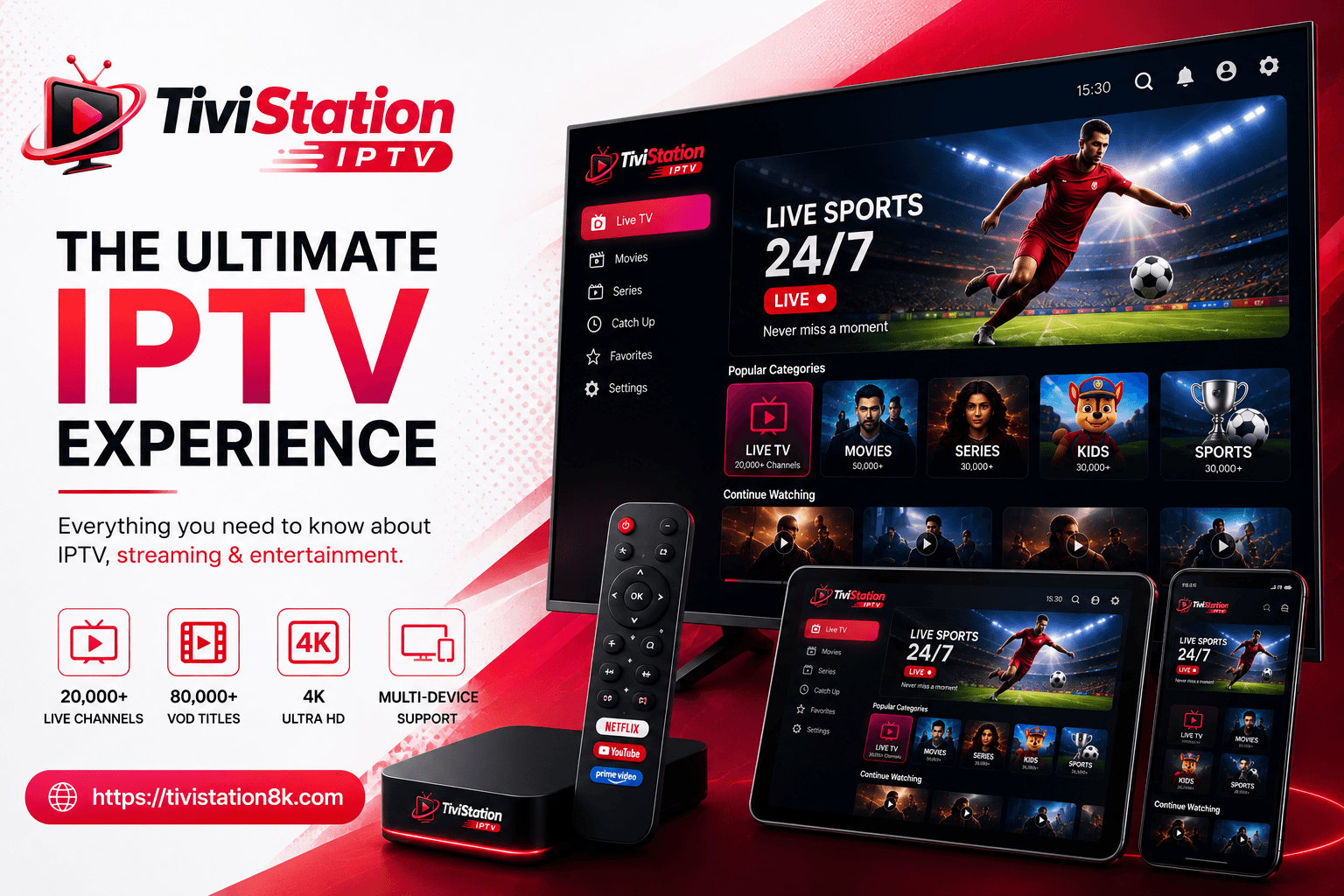
Live TV streaming delivers broadcast-style channels over the internet in real time, using the same segmented-delivery mechanism as on-demand video — the key difference is that the content is a continuous, scheduled feed rather than a fixed, on-request file.
How it works, mechanically
A live stream is broken into short segments (typically a few seconds each) as it's broadcast. Your device requests and buffers a handful of these segments ahead of playback, which is why live streaming runs a few seconds behind the actual real-time broadcast — an unavoidable but minor delay. The fuller technical picture is in how does IPTV work?
Live streaming vs on-demand
Live streaming follows a broadcaster's schedule — you tune in to whatever is currently airing, just like traditional TV. On-demand video (VOD) is the opposite: a fixed library you can start anytime. See what is VOD? for that side of it.
Why server capacity matters more for live streaming
Because live viewers all watch the same feed at the same moment — unlike VOD, where requests are spread out — live streaming creates much more concentrated server demand, especially during major events. This is why infrastructure quality shows up most clearly during live sports; see cheap vs premium IPTV for what that difference looks like in practice.
What is adaptive bitrate streaming?
Most live streams are encoded at several quality levels simultaneously, and the player automatically switches between them based on your current connection speed — stepping down briefly during a congestion spike rather than freezing outright, then stepping back up once bandwidth recovers.
Does live streaming use a CDN?
Well-run services distribute live streams across multiple edge servers (a content delivery network) rather than one central server, so viewers connect to whichever server is closest and least loaded — part of what "load-balanced infrastructure" actually refers to in practice.
Why does live TV sometimes look different in quality from VOD?
Live streams are encoded in real time as the broadcast happens, while VOD titles can be encoded once, carefully, ahead of time — this is why on-demand content sometimes looks marginally sharper than a live feed of the same underlying source, though the difference is usually minor on a well-run service.
Does channel-surfing work the same as with cable?
Yes — switching channels in a player app works the same way conceptually, though there's a brief load time (typically 1–3 seconds) as the app connects to the new stream, similar to changing channels on a cable box.
TiviStation's live TV
TiviStation delivers 20,000+ live channels on load-balanced servers built to handle peak demand — browse the full list on the channels page.
Frequently asked questions
Why does live TV streaming lag a few seconds behind the actual broadcast?
Streams are delivered in small buffered segments rather than a single continuous feed, which adds a short, unavoidable delay — typically a few seconds — compared to a live over-the-air broadcast.
Can live TV streaming handle sudden viewership spikes, like during a big game?
This depends entirely on the provider's server infrastructure — load-balanced setups handle spikes smoothly, while under-resourced ones buffer or drop exactly when demand is highest.
Related resources
Written by the TiviStation team · Published September 2, 2026. Questions about anything in this guide? Contact our 24/7 support team or learn more about TiviStation.
Ready to try TiviStation?
Plans from $20/month with 20,000+ channels in 4K and a 24-hour free trial.
See Pricing