
Comparisons · September 2, 2026 · 6 min read
IPTV vs Cable TV: Which Is Better in 2026?
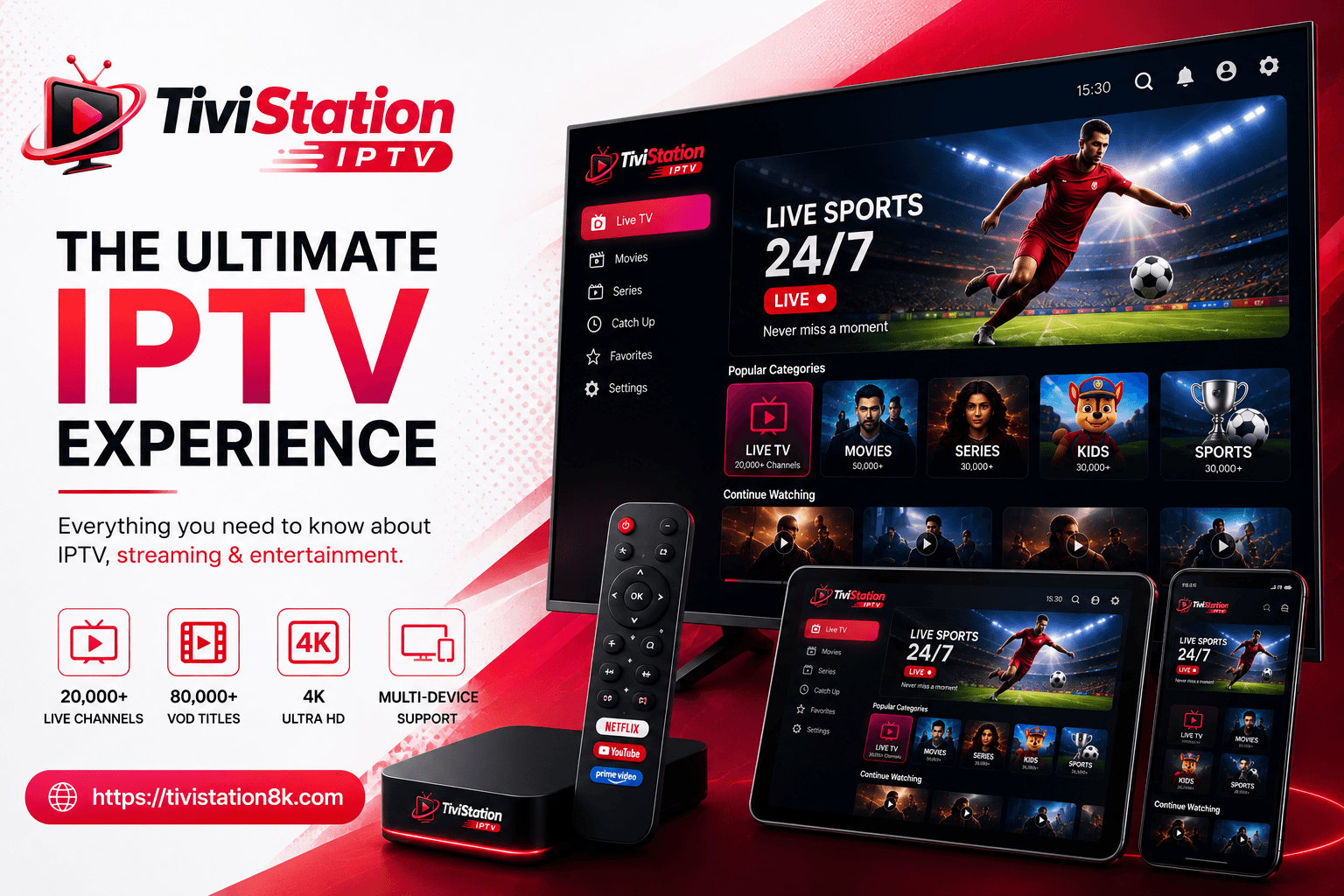
IPTV delivers television over your internet connection; cable delivers it over a dedicated coaxial line. For most households IPTV is significantly cheaper, carries far more international channels and works on every screen you own — while cable's advantages are independence from your broadband and fully local, regulated packaging. The right choice depends mainly on your internet quality and how much international or sports content you watch.
IPTV vs cable at a glance
| IPTV | Cable TV | |
|---|---|---|
| Delivery | Internet connection (10–25 Mbps recommended) | Dedicated coaxial line |
| Typical cost | Low monthly subscription, no hardware rental | Higher monthly bundle plus box rental fees |
| Channel range | Thousands of channels from many countries | Local/regional lineup, paid add-on packs |
| Devices | Smart TV, Firestick, phone, tablet, computer | TVs connected to a rented set-top box |
| Contract | Monthly or prepaid terms, cancel anytime | Often 12–24 month contracts |
| Installation | Install an app, enter a login (~5 minutes) | Technician visit and wiring |
| On-demand | Large VOD library typically included | Limited on-demand, often pay-per-view |
| Reliability | Depends on your internet and the provider | Very stable, independent of broadband |
Where IPTV wins
- Price — a single IPTV subscription usually costs less than a basic cable bundle while covering far more channels, with premium sports included rather than sold as add-ons.
- International content — channels from dozens of countries in one lineup, which cable simply does not offer.
- Portability — your subscription follows you to any device, in any room, or while travelling.
- Setup — installing a player app takes minutes; there is nothing to mount, wire or rent.
Where cable still wins
- Broadband independence — cable keeps working when your internet is down or saturated.
- Zero-configuration simplicity — one box, one remote, no app choices to make.
- Local packaging — regional sports networks and local news are packaged and licensed specifically for your market.
What about picture quality?
Both can deliver 4K, but IPTV quality depends more directly on your own internet connection and the provider's server infrastructure, while cable quality is largely fixed by your cable company's network. A strong home connection paired with a well-run IPTV service typically matches or exceeds cable's picture quality.
What about a DVR?
Cable DVRs record and store shows locally on a box you rent. IPTV's equivalent is catch-up TV — replaying recent broadcasts from the server rather than a local recording — which covers most of the same use case without needing dedicated storage hardware, though it's typically limited to the last several days rather than an indefinite personal recording library.
Which should you choose?
If your home internet delivers a steady 25 Mbps or more, you watch sports or international channels, and you dislike contracts and equipment fees, IPTV is the stronger option. If your broadband is unreliable or you want a fully hands-off, regulated local package, cable remains the safer choice. Many households run IPTV as their main service and keep an antenna or basic tier as backup.
If you go the IPTV route, vet the provider first — the checklist in how to choose an IPTV provider covers trials, uptime, support and refund terms. For grounding on the technology itself, see what is IPTV. And if you want to see what a modern lineup looks like, browse the TiviStation channel list — 20,000+ live channels with plans from $20/month and a 24-hour free trial to test it on your own connection.
Frequently asked questions
Can IPTV fully replace cable?
For most households, yes — IPTV carries live sports, news and entertainment channels plus an on-demand library. The main requirement is a stable internet connection of around 10 Mbps or more.
Do I keep my TV and remote with IPTV?
Yes. IPTV runs as an app on your Smart TV or streaming stick, so you keep your existing TV, remote and setup — there is no technician visit or new wiring.
Related resources
Written by the TiviStation team · Published September 2, 2026. Questions about anything in this guide? Contact our 24/7 support team or learn more about TiviStation.
Ready to try TiviStation?
Plans from $20/month with 20,000+ channels in 4K and a 24-hour free trial.
See Pricing